
Q&A
Meet Perse McCrae:From Horse‑Crazy Kid to Textile Biosensing for Animals
Dr. Perse McCrae has spent her career getting closer to how horses really feel, from riding as a kid to collecting exercising ECGs on racehorses and sport horses.
Five years ago, she moved back to Canada to join Myant Animal Health as program director, where she helps build textile-based biosensors for animals. We sat down with her to talk about where she started, why fabric beats sticky electrodes, and what comes after cardiac monitoring.
Tell us a little about your background. How did you get into animal research?
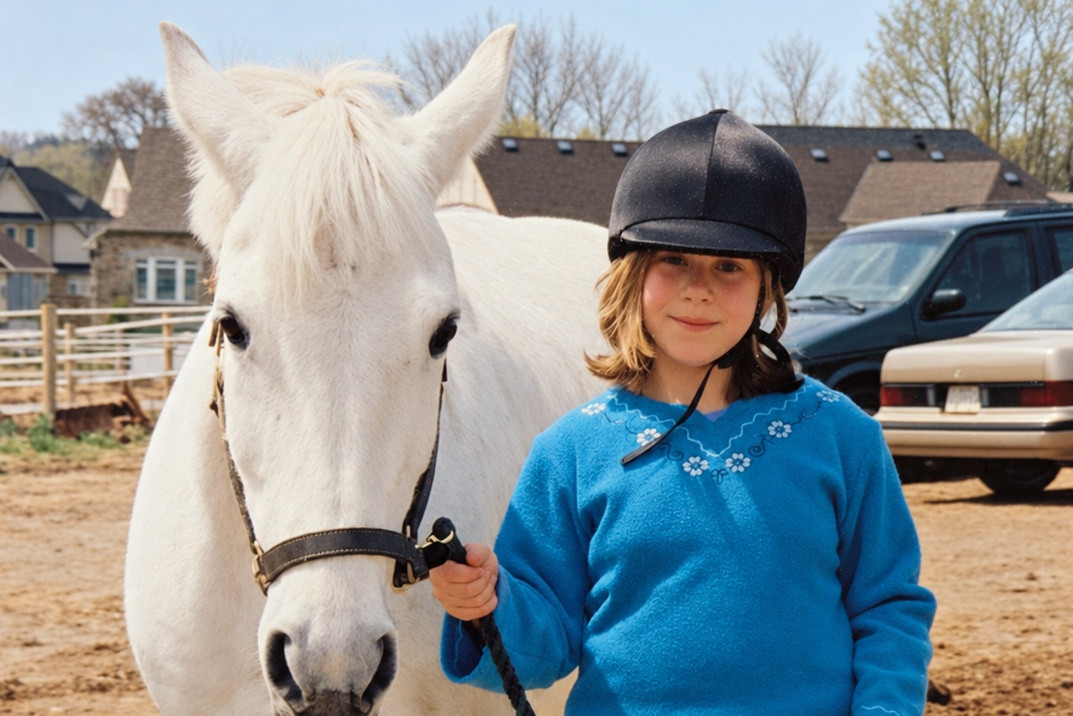
I grew up loving animals and riding horses, and I always knew I wanted to work with animals. I did my undergraduate degree in Animal Biology at the University of Guelph. While I was there, I had the chance to do research in equine biomechanics, and I fell in love with veterinary fieldwork.
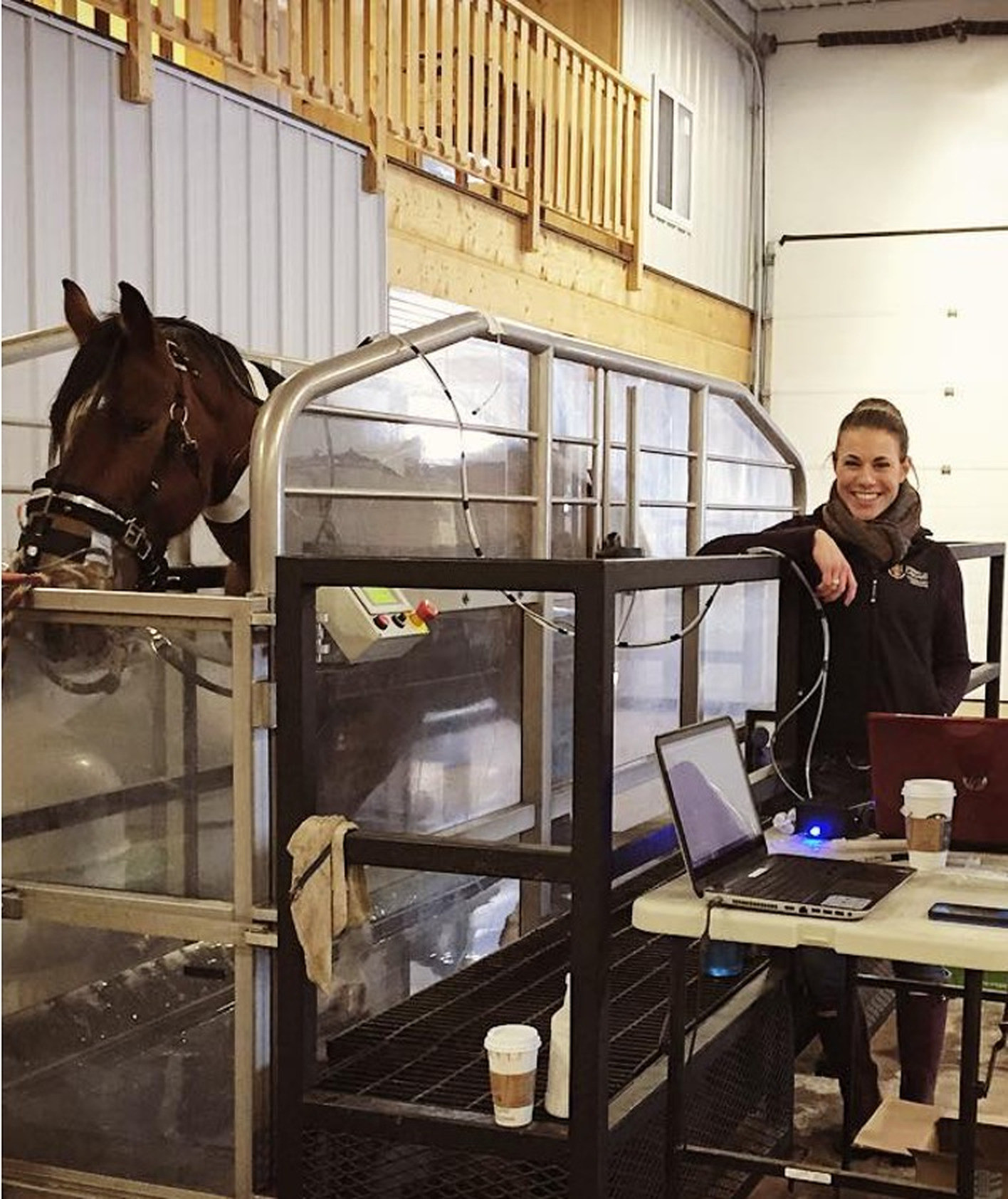
That led me to the Faculty of Veterinary Medicine at the University of Calgary. I started a master’s that turned into a PhD in Veterinary Medical Sciences, focused on equine exercise physiology. My thesis looked at using water treadmills in conditioning and rehabilitation programs for horses.
After that, I worked as an assistant professor of equine science in Texas. While I was there, the CEO of Myant Corp., Tony Chahine, reached out and told me all about the company. It sounded really interesting, so I joined and have been here for five years now.
You moved back to Canada for this work. What makes textiles special for capturing biometric signals from horses?
Textiles are interesting for people, but they’re even more interesting for animals. We think about comfort very differently for animals than we do for people. A lot of the tools we use on animals aren’t designed with comfort in mind, and some weren’t even made for the species we’re using them on.
We know stress and discomfort can mask a lot of symptoms in animals. When you use something that’s genuinely comfortable and fits into their normal routine, you get a much clearer picture of their true baseline, and of subtle shifts away from it.
“Textiles are interesting for people, but they’re even more interesting for animals.”
You knew a lot about equine respiratory and cardiac systems before joining. What surprised you most once you started working with textiles?
People tend to assume that anything that looks different from what we’ve always used won’t work as well. I was really surprised by how much better textiles performed than the adhesive electrodes we normally use.
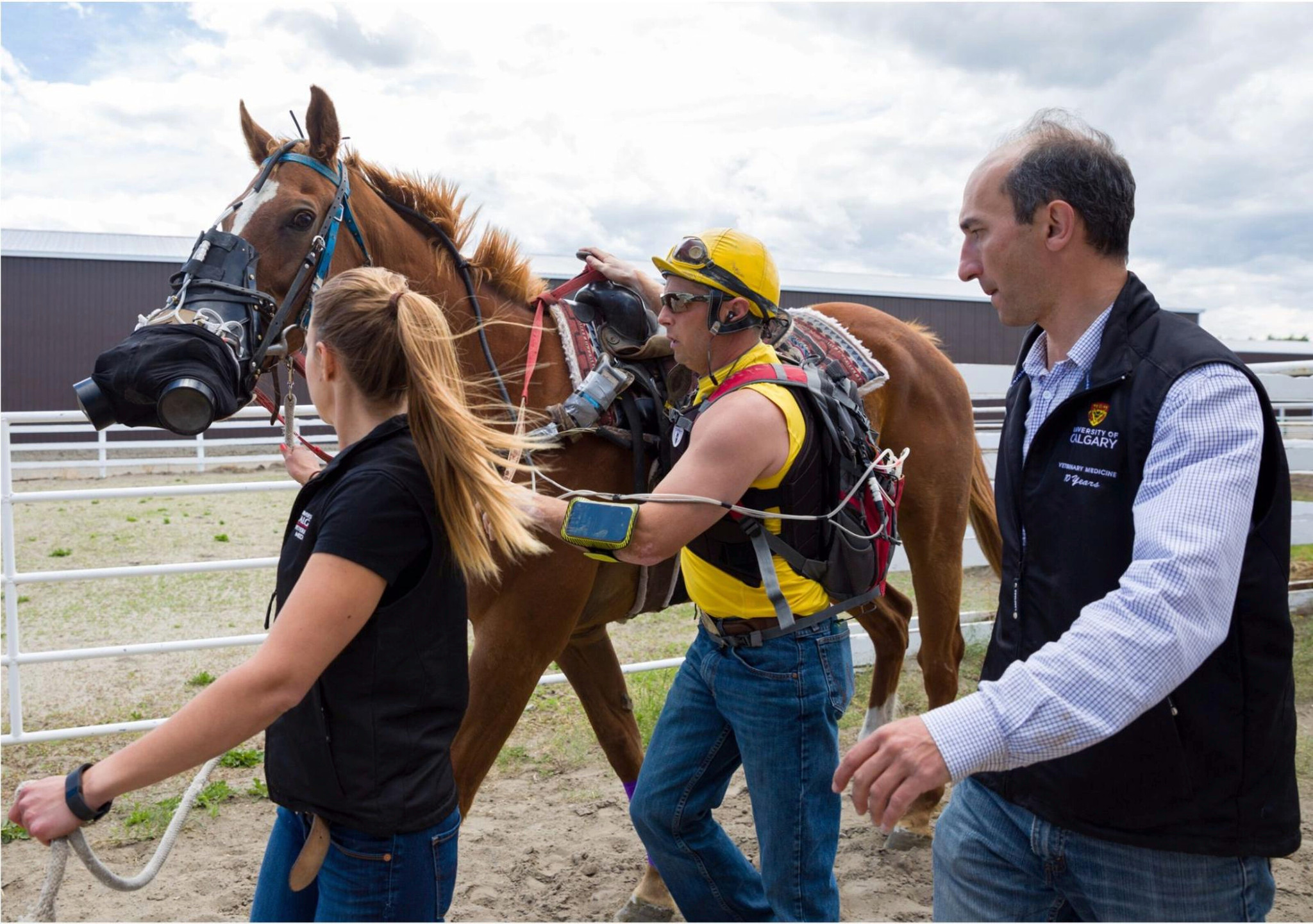
I experienced the problem with adhesive electrodes during my PhD. We ran a lot of exercising ECGs on Thoroughbred racehorses, chuckwagon horses and barrel racers. You’d spend ages getting the horse instrumented, you’d get one shot at collecting data, and then you’d watch your electrodes go flying off partway through.
With textiles, it’s the quality of the data, and especially its consistency, that’s most impressive. That’s what makes it a real game changer. We recently collaborated with Adelaide University and published these results in the Equine Veterinary Journal.
The first SKIIN™ Equine product focuses on ECG. Who is it most exciting for?
This first product is for vets and trainers. For vets, it expands the cardiac monitoring they can offer their clients, including remotely. For trainers, it lets them be closely involved and gain a much better understanding of the cardiac health and fitness of the horses in their care.
What comes after ECG? What else can textiles capture that would help trainers and vets?
Our next big focus is biomechanics for musculoskeletal health. Lameness is very common in sport horses of every breed and discipline. It has a major impact on welfare, performance and career longevity, so that’s the next key thing to target.
Which other animals could benefit? Is this for every species?
Our other focus right now is dogs. Owners want the same standard of care for their dogs that they get for themselves. That means being more proactive about managing their dogs’ health, and hopefully extending both their lifespan and the number of years they stay healthy. It’s a really exciting venture. Beyond this, I think textiles can work very well for many other species too.
This interview has been edited for length and clarity.